

By: Lisa Carter, President, SpartanTec, Inc.
What is incident response training and why is it important?
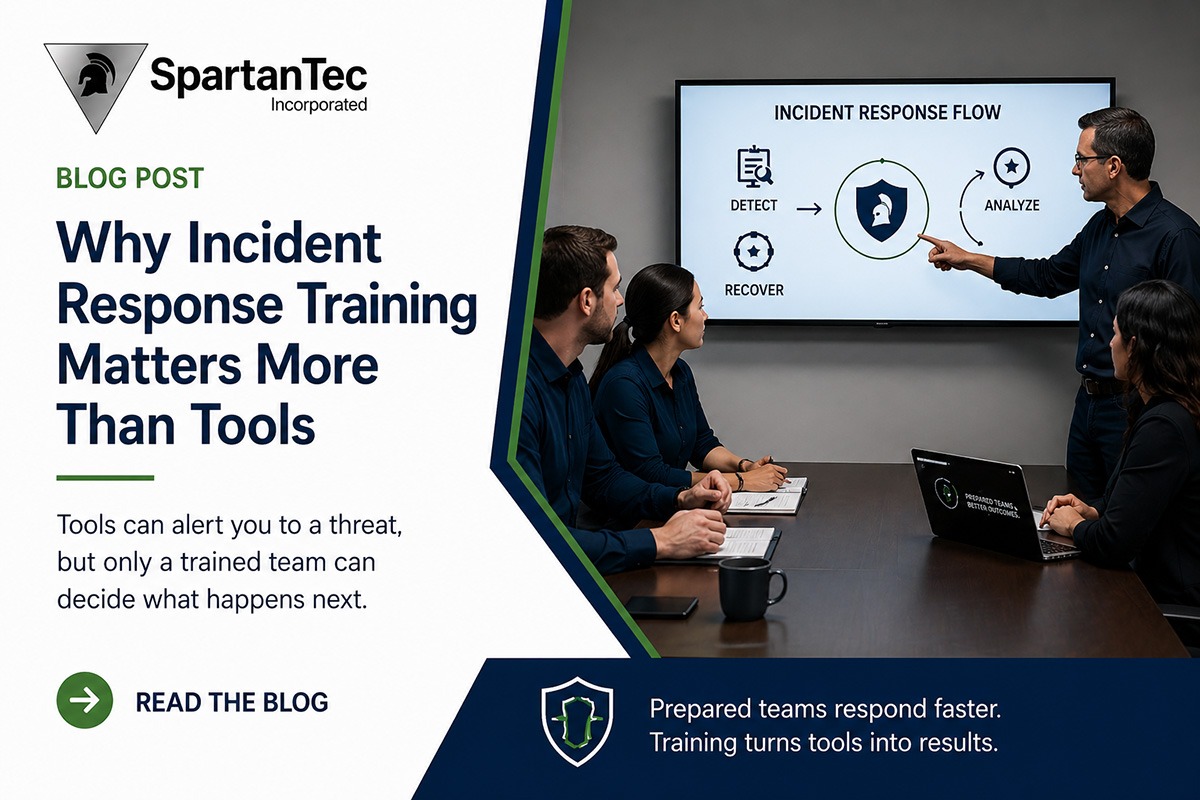
Incident response training prepares an organization to respond quickly and effectively to cybersecurity incidents. It is important because security tools cannot prevent all attacks, and a trained team can reduce downtime, limit damage, and improve recovery outcomes.
Most organizations invest heavily in cybersecurity tools.
Firewalls, endpoint protection, email filtering, and monitoring systems all play an important role.
But when a cyber incident occurs, those tools don’t make decisions.
Your team does.
Can Cybersecurity Tools Prevent All Attacks?
No, cybersecurity tools cannot prevent all attacks. Even advanced security solutions cannot stop every threat, especially attacks involving compromised credentials, phishing, or human error.
Security tools are designed to:
- Detect suspicious activity
- Block known threats
- Provide visibility
But they cannot:
- Decide how to respond
- Coordinate communication
- Manage business impact
That responsibility falls on your organization.
What Happens Without Incident Response Training?
Organizations without incident response training often experience:
- Delayed decision-making
- Confusion about roles and responsibilities
- Miscommunication across teams
- Increased downtime
- Greater financial and reputational impact
What Does Incident Response Training Actually Do?
Incident response training prepares your team to act quickly and confidently during a cyber incident.
It helps organizations:
- Define roles and responsibilities
- Establish clear response steps
- Improve communication
- Reduce uncertainty
- Recover faster
How to Know If Your Organization Is Prepared
Ask yourself:
- Does your team know who is in charge during an incident?
- Are the first steps clearly defined?
- Has your team practiced responding to a real-world scenario?
If you’re not sure where you stand, download our Incident Response Readiness Checklist.
Who Should Be Involved in Incident Response?
Incident response is not just an IT responsibility.
An effective response team should include:
- IT and cybersecurity
- Executive leadership
- Operations
- HR and communications
Why Training Matters More Than Tools
If your organization hasn’t defined those steps yet, it starts with having a clear plan in place.
Here’s what an effective incident response plan should actually include →https://www.spartantec.com/2026/05/01/what-an-incident-response-plan-should-actually-include-and-what-most-miss/. Security tools are essential—but they are only part of the solution. Organizations that recover quickly are the ones that have practiced how to respond.
The Bottom Line
- It is not a matter of if a cyber incident will occur—it is when.
- Preparation determines the outcome.
- Download the Incident Response Readiness Checklist to assess your preparedness.
FAQ
What is incident response in cybersecurity?
Incident response is the process of identifying, managing, and recovering from a cybersecurity incident to minimize damage and restore operations.
How often should incident response training be conducted?
At least once per year, or more frequently depending on organizational risk and changes.
Is incident response training necessary for small businesses?
Yes. Small and mid-sized businesses are frequent targets and often have fewer resources, making preparation critical.
Not Sure If Your Organization Is Prepared?
Most organizations don’t realize where the gaps are until they walk through a real scenario.
A good place to start is understanding your current readiness.
Download our Incident Response Readiness Checklist to quickly assess:
• Where you’re strong
• Where you may be exposed
• What to prioritize next
If you’d rather walk through it together, SpartanTec helps organizations:
• Build incident response plans
• Train teams through real-world scenarios
• Provide ongoing cybersecurity and IT support

