

What Is a Cybersecurity Tabletop Exercise and Why It Matters
Learn what a cybersecurity tabletop exercise is, how it works, and why it’s one of the most effective ways to prepare your organization for a cyber incident.
What is a cybersecurity tabletop exercise?
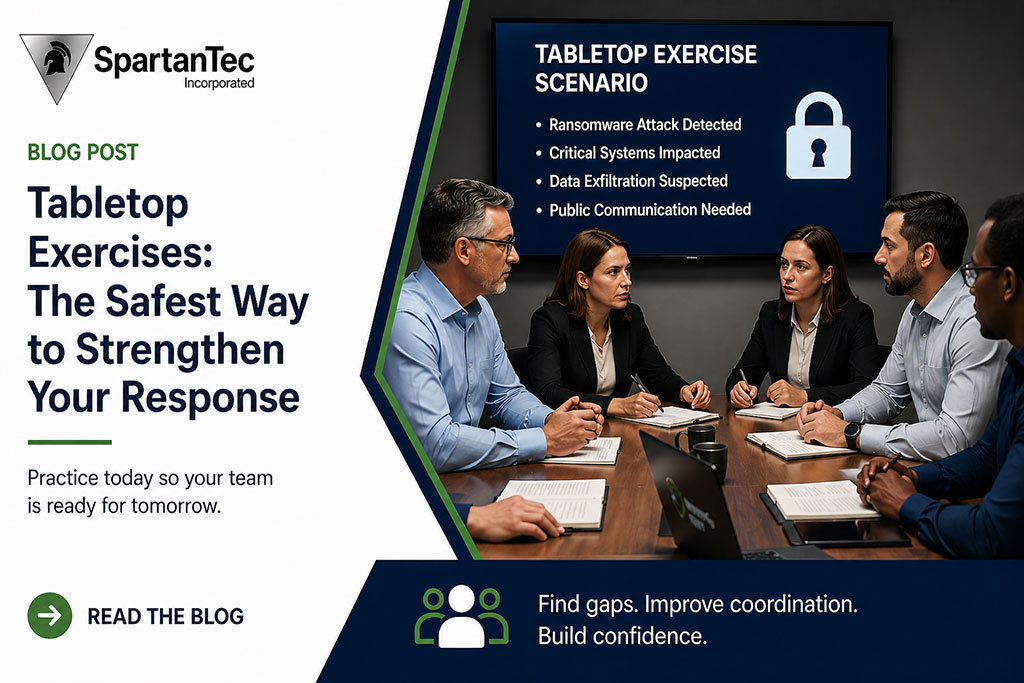
A cybersecurity tabletop exercise is a guided simulation where teams walk through a realistic cyber incident scenario to practice decision-making, communication, and response without impacting real systems.
Tabletop Exercises: The Safest Way to Experience a Cyber Attack
Most organizations believe they’re prepared for a cyber incident.
Until they test it.
A tabletop exercise is one of the most effective ways to move from assumption to real readiness.
What Is a Tabletop Exercise in Cybersecurity?
A tabletop exercise is a structured, discussion-based simulation of a cyber incident.
Instead of responding to a real attack, your team walks through a realistic scenario such as:
- Ransomware
- Phishing compromise
- Data breach
No systems are affected. But the decisions—and consequences—are real.
Why Are Tabletop Exercises Important?
Tabletop exercises help organizations identify gaps before an actual incident occurs. Many organizations focus on security tools but overlook how their team will actually respond during an incident.
Here’s why incident response training is critical to reducing risk → https://www.spartantec.com/2026/05/01/why-incident-response-training-matters-more-than-your-security-tools/
They reveal:
- Unclear roles and responsibilities
- Gaps in communication
- Delays in decision-making
- Overlooked dependencies
Many organizations discover issues they didn’t know existed.
What Happens During a Tabletop Exercise?
A tabletop exercise walks your team through a simulated incident step by step. A tabletop exercise is most effective when it’s based on a structured response plan.
Here’s what an incident response plan should include → https://www.spartantec.com/2026/05/01/what-an-incident-response-plan-should-actually-include-and-what-most-miss/
Typically:
- A realistic scenario is introduced
- The situation escalates over time
- Team members discuss how they would respond
- Decisions are evaluated in real time
The focus is not technical execution—it’s decision-making and coordination.
Who Should Participate in a Tabletop Exercise?
Tabletop exercises should involve more than just IT.
Participants should include:
- IT and cybersecurity teams
- Executive leadership
- Operations or department leaders
- HR and communications (when applicable)
Cyber incidents impact the entire organization—not just systems.
If you haven’t tested your response before, a good first step is understanding your current readiness.
We created a simple Incident Response Readiness Checklist to help you quickly identify gaps in:
- Roles and responsibilities
- Communication planning
- Testing and training
- Ongoing readiness
What Do Organizations Learn From Tabletop Exercises?
The most valuable outcome is clarity.
Organizations often learn:
- Their plan is harder to follow than expected
- Communication breaks down under pressure
- Key decisions take longer than anticipated
“We thought we were ready—but we weren’t.”
How Often Should You Conduct Tabletop Exercises?
At least once per year, or more frequently for higher-risk organizations.
You should also run exercises when:
- Major systems change
- New leadership or staff are onboarded
- Your risk profile changes
Regular practice keeps your response sharp.
What Makes a Tabletop Exercise Effective?
The best tabletop exercises are practical and relevant to your organization.
They should be:
- Based on real-world scenarios
- Tailored to your environment
- Focused on decision-making—not technical jargon
The goal is not perfection—it’s improvement.
Want to Strengthen Your Incident Response Approach?
- Why incident response training is critical → https://www.spartantec.com/2026/05/01/why-incident-response-training-matters-more-than-your-security-tools/
- What an incident response plan should include → https://www.spartantec.com/2026/05/01/what-an-incident-response-plan-should-actually-include-and-what-most-miss/
The Bottom Line
You don’t want your first real cyber incident to be your first time responding. Preparation comes from practice.
FAQ
What is a cybersecurity tabletop exercise?
A tabletop exercise is a simulated cyber incident where teams walk through how they would respond, helping improve decision-making and coordination.
How long does a tabletop exercise take?
Most tabletop exercises take between 1–3 hours depending on the complexity of the scenario and the size of the organization.
Who should participate in a tabletop exercise?
IT, leadership, and key business functions like operations and HR should be involved since incidents affect the entire organization.
How often should tabletop exercises be conducted?
At least once per year, or more frequently depending on risk level and organizational changes.
What are the benefits of a tabletop exercise?
They help identify gaps, improve communication, clarify roles, and prepare teams to respond more effectively during real incidents.
Not Sure How Your Team Would Respond?
Most organizations don’t know until they walk through a real scenario. A simple way to start is identifying where your gaps may be.
Download our Incident Response Readiness Checklist to:
- Evaluate your current preparedness
- Identify weak points
- Understand what to improve
If you’d like to take it a step further, SpartanTec helps organizations:
- Conduct tabletop exercises
- Build and refine incident response plans
- Provide ongoing cybersecurity and IT support
Schedule a Discovery Call: https://www.spartantec.com/discoverycall/

