

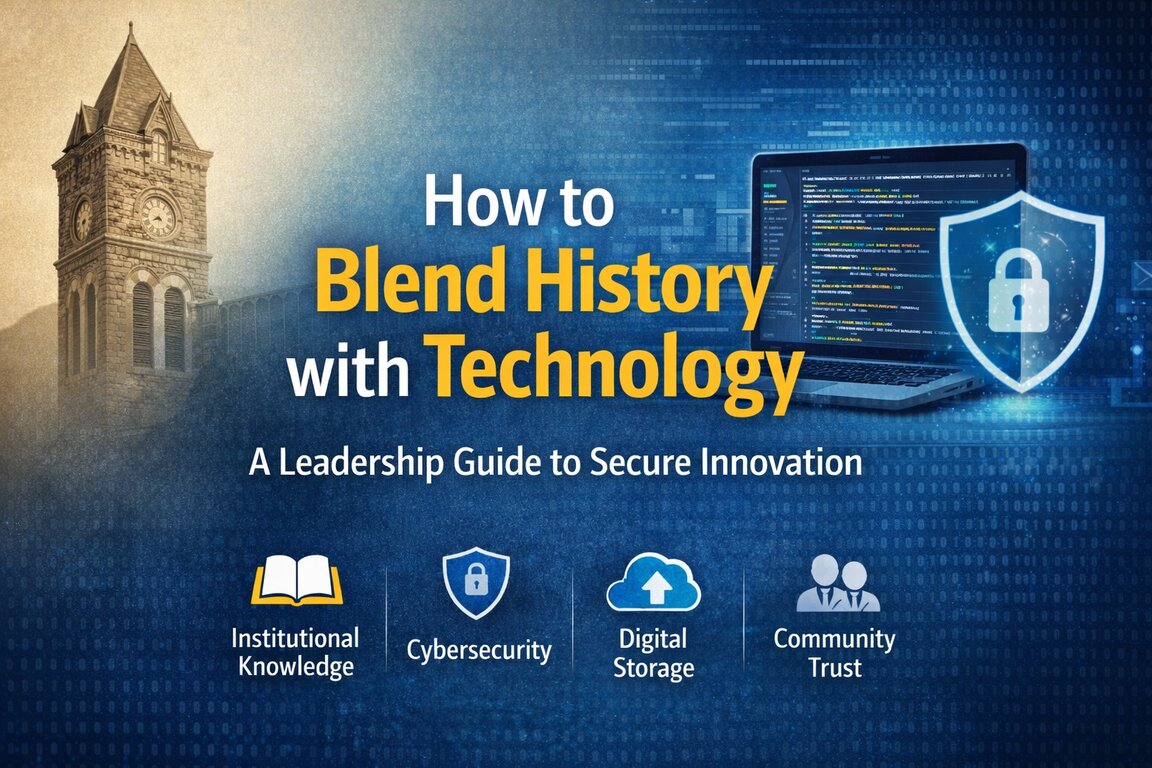
A Leadership Guide to Secure Innovation
By Lisa Carter
Cybersecurity & Operational Risk for Organizations
Technology often feels focused only on what’s next—new platforms, faster automation, smarter AI. Yet the organizations that adopt technology most successfully are rarely the ones chasing trends. They are the ones that understand their history and use it to guide smarter, more secure decisions.
Blending history with technology is not about holding onto the past. It is about using proven lessons to shape intentional innovation, stronger security, and long‑term resilience.
Why history still matters in a digital world
Every organization carries patterns shaped over time:
- How decisions are made
- Where risk tends to appear
- What customers and communities value most
- Which processes have quietly worked for years
When technology is introduced without understanding these patterns, it often creates friction. When technology aligns with them, adoption feels natural and sustainable.
This is why successful digital transformation begins with institutional memory, not software demos.
Technology should strengthen—not replace—core identity.
For businesses across the Carolinas, history is tied to trust, service, and community responsibility.
The purpose of modern IT is not to erase those qualities. It is to protect and extend them.
That can include:
- Securing long‑standing financial processes against modern fraud
- Preserving historical records through secure cloud storage and retention
- Using AI to enhance decision‑making while maintaining human oversight
- Modernizing communication without losing personal connection
When done well, technology becomes a continuation of mission, not a disruption.
Security lessons are often historical lessons
Many cybersecurity incidents are not caused by sophisticated hacking. They result from repeating old assumptions in new environments:
- Trusting requests that appear routine
- Assuming visibility exists when it does not
- Relying on informal processes that once worked in smaller settings
History shows where these weaknesses live. Technology provides the tools to correct them. Together, they create true operational resilience.
Practical ways leaders can blend history with innovation
Leaders do not need massive budgets to do this well. They need intentional, mission‑aligned action.
- Document what has worked. Capture long‑standing processes before replacing them.
- Identify legacy risks. Old habits often become modern vulnerabilities.
- Modernize with purpose. Adopt tools that support mission—not just trends.
- Protect institutional knowledge. Secure backups, retention policies, and continuity planning are foundational.
- Keep people at the center. Technology should enhance human judgment, not remove it.
The future belongs to organizations that remember
Innovation without context creates instability. History without innovation creates stagnation. But when the two are blended thoughtfully, organizations gain something far more powerful: confidence to move forward without losing what made them strong.
That balance is where resilience lives—and where secure innovation begins.
Final thought
At SpartanTec, we work with organizations throughout North and South Carolina that carry deep history and strong community responsibility.
Our role is not simply to introduce new technology. It is to help leaders protect what matters most while preparing for what comes next—because the strongest future is always built on a well‑understood past.
Frequently Asked Questions
Why is organizational history important in digital transformation?
Organizational history reveals decision patterns, trusted processes, and long-standing risks. Understanding these elements helps leaders adopt technology in ways that support mission, reduce disruption, and avoid repeating past vulnerabilities in new digital environments.
How does blending history with technology improve cybersecurity?
Many cyber incidents stem from legacy habits such as informal approvals or limited visibility. Identifying these historical weaknesses and applying modern security controls strengthens protection while preserving trusted workflows.
Can small organizations apply this approach without large budgets?
Yes. Blending history with technology is primarily a leadership strategy, not a spending strategy. Documenting processes, identifying legacy risks, securing backups, and choosing mission-aligned tools can significantly improve resilience without major capital investment.
What industries benefit most from this mindset?
Municipalities, charter schools, nonprofits, accounting firms, and small businesses benefit strongly because they carry deep institutional knowledge, regulatory responsibility, and community trust that must be protected during modernization.
What is the biggest mistake leaders make during modernization?
Adopting technology based on trends rather than mission alignment. When innovation ignores historical context, it can create security gaps, operational friction, and loss of institutional knowledge.
How can leadership start blending history with technology today?
Begin by documenting long-standing processes, identifying legacy risks, protecting historical data with secure backups, and selecting technology that strengthens—rather than replaces—the organization’s core mission.

